 blog
Best Wine for Dinner Party: 2026 Picks & Pairing Tips
Table of Contents
- How to Choose the Best Wine for Dinner Party Success
- A Practical Wine and Food Pairing Guide for Hosts
- Crowd-Pleasing Red Wines for a Dinner Party
- White, Sparkling, and Non-Alcoholic Options Guests Will Love
- How Much Wine Per Person for Dinner Party Planning
- What Wine to Bring to a Dinner Party Host
- Serving Temperatures, Decanting, and Storage Logistics
- Frequently Asked Questions
Last Updated: October 1, 2026
How to Choose the Best Wine for Dinner Party Success
The best wine for dinner party hosting is the bottle that fits your menu, your guest count, and your serving setup, not the one with the prettiest label.
Match the Wine to the Menu, Not the Other Way Around
Most hosts do this backwards: they buy a wine they love, then build a menu around it. That's how you end up serving a heavy Cabernet with a delicate fish course.
The Three-Bottle Rule for Any Guest List
No single bottle pleases everyone. Plan for three styles instead of one perfect pick.
- One red that's fruit-forward and low in tannins, like a Merlot or a softer Syrah
- One white that's crisp and versatile, like a Sauvignon Blanc or unoaked Chardonnay
- One wildcard, which could be a sparkling wine, a rosé, or a non-alcoholic option
A Practical Wine and Food Pairing Guide for Hosts
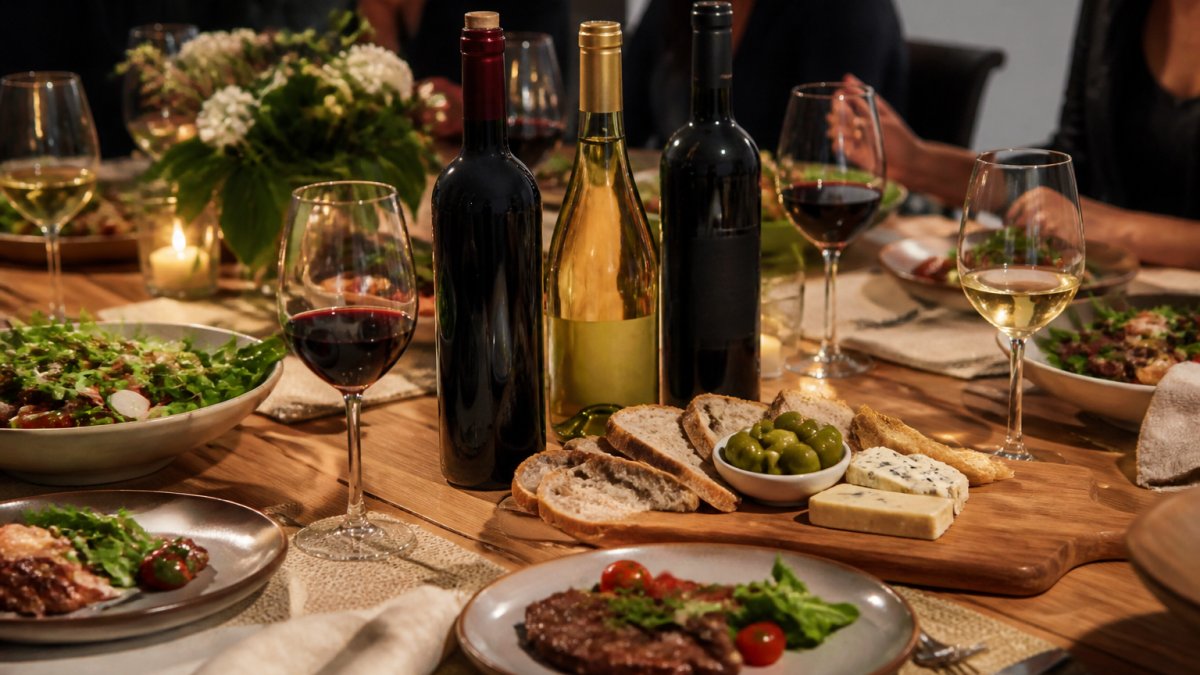
A wine and food pairing guide matches a bottle's body, acidity, and sweetness to the weight and flavor of a dish. The goal isn't perfection, it's avoiding clashes.
The pairing logic that matters most:
- Acidic wines with fatty or fried foods. The crisp edge resets your palate between bites.
- Sweet wines with spicy food. Sugar tames heat in a way dry wines can't.
- Earthy, tannic reds with red meat. Tannins bind to protein and soften on the finish.
- Light, dry whites with seafood, salads, and vegetables. They don't overpower delicate aromas.
Crowd-Pleasing Red Wines for a Dinner Party
The most reliable red for a dinner party is medium-bodied and fruit-forward with soft tannins: Merlot, a warmer-climate Syrah, or a dry red blend. These please many palates without demanding attention.
Cabernet Sauvignon, Merlot, and Syrah Compared
| Wine | Body | Tannins | Best For | Watch Out For |
|---|---|---|---|---|
| Cabernet Sauvignon | Full-bodied | High | Steak, lamb, aged cheese | Overpowering lighter dishes |
| Merlot | Medium-bodied | Low to medium | Roast chicken, pasta, pork | Can feel simple if too cheap |
| Syrah | Medium to full | Medium | Grilled meat, BBQ, stews | Peppery notes split a crowd |
Cabernet is safest when the menu is red meat; Merlot when you don't know the menu at all. Syrah sits in between and rewards anything smoky or grilled.
White, Sparkling, and Non-Alcoholic Options Guests Will Love
Crisp, dry whites and a good sparkling wine belong at every dinner party, and non-alcoholic options are no longer an afterthought, a growing share of guests skip alcohol for health, religion, or preference.
How Much Wine Per Person for Dinner Party Planning
The standard estimate for how much wine per person for dinner party planning is one bottle per two guests for a two-hour event, plus extra if the evening runs long, roughly two to three glasses per drinking guest.
Here's the math that keeps you from running dry:
- A standard bottle holds about five glasses
- Two glasses per guest is a safe baseline
- Add one glass per person for every extra hour
- Add one backup bottle for every six guests
| Guest Count | 2-Hour Party | 3-Hour Party | 4-Hour Party |
|---|---|---|---|
| 4 guests | 2 bottles | 3 bottles | 4 bottles |
| 8 guests | 4 bottles | 5 bottles | 6 bottles |
| 12 guests | 6 bottles | 8 bottles | 9 bottles |
What Wine to Bring to a Dinner Party Host
The best wine to bring to a dinner party host is a bottle in the $20 to $40 range that's versatile enough to serve with almost anything, plus a small personal touch. You're not matching their menu. You're thanking them.
Here's what "versatile" actually means in bottle terms.
Bottles That Travel Well as Host Gifts
- Dry sparkling wine (Brut or Extra Brut). Handles salty snacks, fried appetizers, and a toast. Almost no host turns it down, and it keeps for a day or two if they don't open it that night.
- Fruit-forward red with soft tannins. Merlot, a warmer-climate Syrah, or a dry red blend. Forgiving with roast chicken, pasta, pork, and most cheese boards.
- Crisp, unoaked white. Sauvignon Blanc, Albariño, or unoaked Chardonnay. The safest bottle if you genuinely don't know the menu.
- A dry rosé in warm months. Sits between red and white in weight, so it works with grilled food, salads, and charcuterie.
Skip anything that needs a decanter, a specific glass, or an explanation. A host mid-service doesn't want homework.
Match the Bottle to What You Know About the Host
| What You Know | Best Bottle to Bring | Why |
|---|---|---|
| Nothing at all | Dry sparkling or unoaked white | Works before, during, and after the meal |
| They cook red meat | Medium-to-full red (Cabernet, Syrah) | Complements the menu they've already planned |
| They're vegetarian or vegan | Crisp white, dry rosé, or a lighter red | Won't clash with vegetable-forward courses |
| They avoid alcohol | Quality non-alcoholic sparkling or a low-ABV option | Lets them participate without a separate trip |
| They're a serious collector | Something obscure but well-made | Shows thought; they'll enjoy it on their own schedule |
Dietary and Non-Alcoholic Considerations
Most host-gift guides ignore this, and it's the fastest way to bring something the host can actually use.
- Vegan guests. Many fining agents used in winemaking are animal-derived. Look for bottles labeled vegan or unfined and unfiltered.
- Gluten-free guests. Wine is naturally gluten-free, but flavored or wine-based cocktails may not be. Stick to straight wine.
- Low-histamine or sulfite-sensitive guests. Red wines generally carry more histamines than whites (pubmed.ncbi.nlm.nih.gov). A crisp white or a natural-leaning bottle is often a gentler choice.
- Non-drinkers. A well-made non-alcoholic sparkling wine is the single most useful gift you can bring to a mixed table. It's no longer a consolation prize.
Etiquette Basics That Still Hold
- Spend enough to show you thought about it, not so much that it feels like a statement.
- Skip anything so obscure the host can't serve it later.
- Bring a bottle you'd happily drink yourself.
- If you know the host's taste, lean into it. If you don't, a dry sparkling wine or a fruit-forward red is a safe, generous choice.
One more note on corkage and logistics: if you're bringing wine to a restaurant instead of a home, call ahead. Policies vary widely, and a quick call saves an awkward moment at the table.
Serving Temperatures, Decanting, and Storage Logistics
Serving temperature changes how a wine tastes more than almost anything else you can control. Reds served too warm taste flabby and alcoholic; whites served too cold lose their aroma and bouquet.
The targets:
- Sparkling: well chilled, around 40 to 45°F
- Crisp whites: chilled, around 45 to 50°F
- Light reds: lightly chilled, around 55°F
- Full-bodied reds: cellar temperature, around 60 to 65°F
Storage Logistics for Hosts Who Buy Ahead
Keep bottles away from heat, direct light, and vibration. A cool closet beats a warm kitchen counter every time. Three rules that cover most home setups:
- Store bottles on their side if you're holding them more than a few weeks. Upright storage dries out the cork over time.
- Avoid the garage and the top of the fridge. Both swing in temperature more than people expect.
- Buy close to the event. For a dinner party, wine bought the same week is almost always in better shape than wine that's been sitting in a warm room for a month.
Transporting Wine to Someone Else's Home
This is the part most guides skip, and where bottles actually get ruined.
- On a hot day, keep bottles in the trunk, not the back seat. The trunk stays cooler and out of direct sun. On a cold day, the reverse, bring them inside the cabin so they don't freeze.
- Use a wine tote or a box with a divider. A bottle rolling around in a bag is a bottle that arrives shaken and, occasionally, broken.
- Give sparkling wine time to settle. If you've just driven across town, let a sparkling bottle rest 15 to 20 minutes before opening. Shaking plus pressure equals a mess.
- Don't leave bottles in the car while you run errands. A 20-minute stop on a 90°F day can push a bottle past the point of no return.
Recovering a Bottle That Got Too Warm
- Chill it back down slowly. An ice bucket with water and a handful of salt gets it to serving temperature in about 15 minutes.
- Taste before you pour for guests. Heat damage shows up as a flat, stewed, or slightly cooked flavor. If it tastes off, don't serve it, open something else.
- If it's a red and it tastes flat, a short decant can sometimes bring back some life. It won't fix real heat damage, but it helps a bottle that's just a touch too warm.
That's where a delivery service earns its keep. Bel Pre Fine Wine delivers to your door in Silver Spring, so bottles arrive without sitting in a hot car or getting jostled on the way. Our FREE loyalty rewards program means the more you host, the more you save on the next round.
Frequently Asked Questions
What is the most crowd-pleasing red wine for a dinner party?
A medium-bodied, fruit-forward red like Merlot or a soft Cabernet Sauvignon tends to satisfy the widest range of palates. These wines have moderate tannins and balanced acidity, so they work with everything from roasted chicken to pasta to grilled steak. Avoid heavily oaked or very tannic wines, which can overwhelm lighter dishes and divide guests. If you want one safe bottle, choose a smooth, food-friendly red with bright fruit notes and a clean finish.
How many bottles of wine do I need for a dinner party?
Plan on roughly half a bottle per guest for a two-to-three-hour dinner, which works out to about two to three glasses each. For a party of eight, that means four to five bottles. Add one extra bottle as a buffer, and include at least one white and one non-alcoholic option so guests have choices. If the gathering runs long or includes heavy drinkers, round up rather than down. A mix of red, white, and sparkling covers more preferences.
Should I bring wine to a dinner party if I don't know the menu?
Yes, and choose a versatile bottle that pairs broadly. A dry sparkling wine, a crisp unoaked white like Sauvignon Blanc, or a medium-bodied red like Pinot Noir works with most dishes. Avoid very sweet or heavily oaked wines, which clash with many foods. If you want the host to enjoy it later, a slightly nicer bottle they can save is a thoughtful choice. Bring it as a host gift rather than expecting it to be opened that night.
What are the best white wines for a large group?
Dry, crisp whites with bright acidity please the most people. Sauvignon Blanc, unoaked Chardonnay, Pinot Grigio, and dry Riesling are reliable picks. They pair well with salads, seafood, chicken, and appetizers, and they stay refreshing across a long evening. Serve them well chilled, around 45 to 50 degrees Fahrenheit. For a crowd, buy two different whites so guests can compare and find a favorite.