 How-to
How to Host a Craft Beer Tasting at Home
Quick Summary
To host a craft beer tasting at home, pick a theme, invite six to ten guests, and choose four to six beers from different styles. Serve small 2 oz pours, order light to dark, and give guests water and plain crackers to reset their palates between beers.
- Invite six to ten guests, sending invitations two to three weeks ahead.
- Choose four to six beers from different styles, mixing light and bold options.
- Pour about 2 oz per beer so guests can taste five or six without getting full.
- Serve each beer at its right temperature, pulling bottles from the fridge about 20 minutes before pouring.
- Provide water after every pour and a short break after the third or fourth beer.
Table of Contents
- Choosing a Theme and Guest List for Your Craft Beer Tasting
- Selecting Beer Styles and Calculating How Much to Buy
- Setting the Beer Tasting Flight Order
- Gathering Glassware, Supplies and a Beer Tasting Sheet PDF
- Pouring Small Samples and Managing Your Palate
- Scoring Each Beer With a Beer Tasting Score Card
- Beer Tasting Party Ideas, Food Pairings and Responsible Hosting
- Booking Your Next Tasting Supplies From Bel Pre Fine Wine
- Frequently Asked Questions
Choosing a Theme and Guest List for Your Craft Beer Tasting
Hosting a craft beer tasting at home is one of the easiest ways to bring friends together for a relaxed, memorable evening.
Start by picking a theme. A theme gives your guests a reason to taste, and it gives you a simple way to choose your beers. Common themes include:
- Regional styles: Compare beers from a single state or from different parts of the country.
- Style flights: Taste one family of beers, such as IPAs, stouts, or sours.
- Seasonal picks: Pour lighter beers in summer and darker beers in winter.
- Pairing night: Match each beer with a snack or small bite.
Next, build your guest list. Six to ten guests is a good size for a first tasting.
Send invitations about two to three weeks ahead. Tell guests the theme and ask whether anyone has a dietary need or does not drink alcohol. Offering a non-alcoholic option, such as sparkling water or a craft non-alcoholic beer, keeps everyone included.
Watch out: Do not invite guests who have already had a long day of drinking. Keeping the group focused makes the tasting more enjoyable for everyone.
Selecting Beer Styles and Calculating How Much to Buy
A good tasting shows a range of flavors without overwhelming the palate. Choose four to six beers from different styles. Mix lighter options like a pilsner or wheat beer with bolder choices like a stout or barleywine. Ordering from light to dark is a classic approach, but the calculator below is what most first-time hosts actually need.
The quantity calculator
Work backward from pour size and guest count. A standard tasting pour is 2 oz, which is about one-sixth of a 12 oz bottle. That means one 12 oz bottle yields roughly six 2 oz pours. Use this formula:
- Total pours needed = guests × beers per guest
- Bottles needed = total pours ÷ 6, then round up
- Add 15-20% buffer for favorites, spills, and second pours
Here is the math worked out for common party sizes at 2 oz pours:
| Guests | Beers per guest | Total pours | 12 oz bottles needed | With 20% buffer |
|---|---|---|---|---|
| 4 | 4 | 16 | 3 | 4 |
| 6 | 5 | 30 | 5 | 6 |
| 8 | 5 | 40 | 7 | 8-9 |
| 10 | 6 | 60 | 10 | 12 |
| 12 | 6 | 72 | 12 | 14-15 |
If you buy 4-packs or 6-packs instead of singles, divide the bottle count by the pack size and round up. For a 10-guest, 6-beer tasting, 12 bottles is two 6-packs, a clean, easy order.
Glass count
Plan one tasting glass per guest per beer if you can, or at least one glass per guest plus a water glass. For a 10-guest, 6-beer tasting that is 60 small glasses in the ideal case, which is unrealistic for most homes. A practical compromise: two glasses per guest (one for beer, one for water) and a rinse station. Rinsing with water between pours is faster than washing, and it keeps aromas from carrying over.
Budget framework
Craft beer pricing varies widely by style, brewery, and retailer, so plan your budget around the bottles you actually choose. Build your budget in three lines:
- Beer: bottles needed × your average per-bottle price
- Glassware and supplies: small tasting glasses, score sheets, crackers, water
- Buffer: 10-15% for a splurge bottle or a replacement run
Check your local shop or retailer for current prices before you commit.
Storage and serving conditions
Pull bottles from the refrigerator about 20 minutes before pouring so aroma opens up. Clean glassware with no soap residue is essential, soap film kills head retention and mutes aroma.
Watch out: Do not buy a full case of a single style to save money. Variety is the point of a tasting, and leftover beer from a one-note order is harder to use up than a mixed selection.
Bottles needed for common party sizes
Setting the Beer Tasting Flight Order
The order you serve beers matters. A poor order can make a strong beer taste weak, while a good order helps each beer shine. The classic rule, light to dark, is a good starting point, but it breaks down when you mix sours, high-alcohol beers, and heavily hopped styles. Use an intensity framework instead.
The four-axis order
Rank each beer on four axes before you pour: intensity, bitterness, alcohol, and roast. Serve from low to high on each axis, and when two beers conflict, let alcohol and roast break the tie. A practical sequence:
- Light lagers and pilsners, low intensity, low bitterness, low alcohol
- Wheat beers and pale ales, soft malt, gentle hops
- Saisons and lower-ABV sours, bright acidity, moderate intensity
- IPAs and hoppy beers, high bitterness, high aroma
- Amber and brown ales, malt-forward, moderate roast
- Porters and stouts, roast and body
- Barrel-aged and high-alcohol beers, the heaviest finish
Sour beers and very high-alcohol beers often work best at the end, or as a separate round. Their strong flavors can linger and affect the taste of anything that follows. If you have a very acidic sour and a delicate pilsner, do not put the sour first, the acidity will flatten the pilsner.
Palate management between pours
Your taste buds fatigue after several strong beers, and bitterness in particular builds up. Build resets into the sequence:
- Water after every pour. A few sips of still water is the single most effective reset.
- Plain crackers or bread between flights, not between every beer, too much starch fills guests up.
- A short break after the third or fourth beer. Five minutes of conversation resets the palate more than any snack.
- Rinse the glass with water between beers if you are reusing glasses, and dump the rinse rather than drinking it.
Many hosts find that guests can comfortably taste five to six beers in one sitting. If you plan more, split the tasting into two flights with a longer break and food in between.
Temperature and pour timing
Serve each flight at the right temperature. Lagers and pilsners are best cold, around 38-45 degrees Fahrenheit; IPAs and pale ales around 45-50; stouts, porters, and high-alcohol beers around 50-55.
Watch out: Serving a very hoppy IPA early can dull the taste buds for delicate lagers, and serving a barrel-aged stout before a pilsner will make the pilsner taste like water. Keep the strongest flavors for later in the tasting.
Gathering Glassware, Supplies and a Beer Tasting Sheet PDF
You do not need expensive equipment, but the right supplies make a big difference. Use this checklist before your guests arrive:
- Small tasting glasses (2 to 4 oz) or a glass per beer style
- Clean, dry glassware with no soap residue
- Water pitcher and cups for palate cleansing
- Unsalted crackers or plain bread
- Small plates or a tasting mat for labels
- Bottle opener and ice bucket
- Pens and printed score sheets
- Trash bag and extra napkins
Keep one glass per beer if you can, or wash and dry glasses between pours.
Print a tasting sheet for each guest. A simple beer tasting sheet PDF should include space for the beer name, style, color, aroma, flavor, and overall rating. You can create one in a word processor or find a free printable template online.
Pouring Small Samples and Managing Your Palate
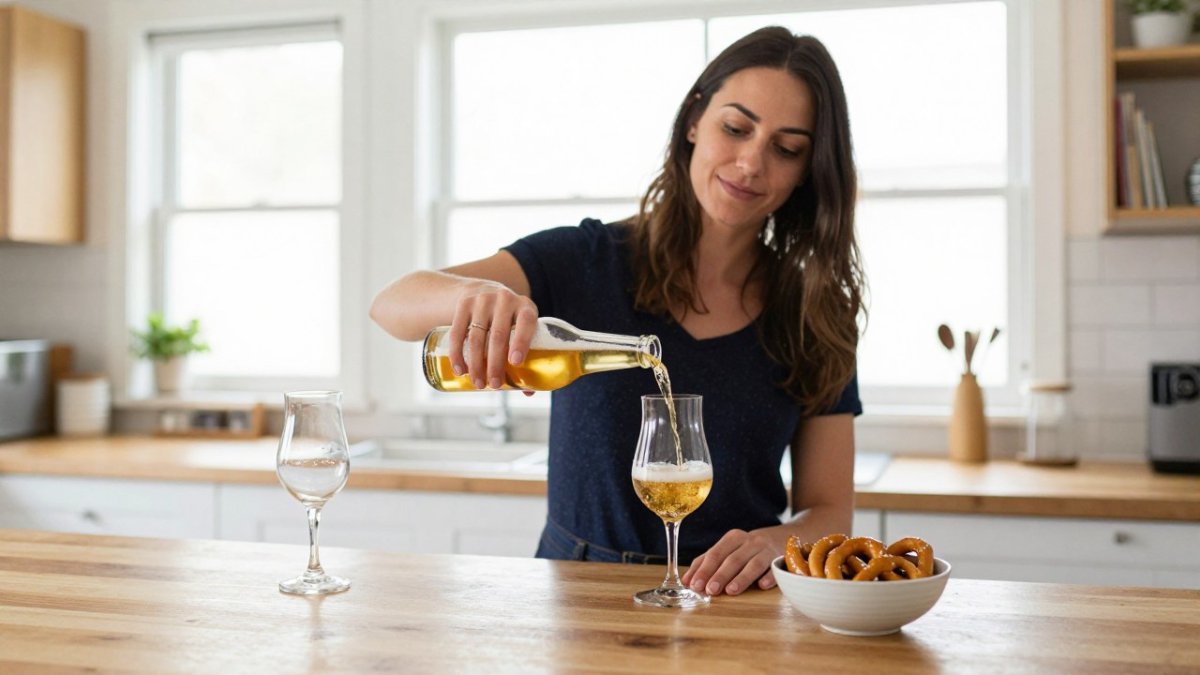
Small pours keep the tasting fun and prevent guests from getting full or tipsy too fast. Aim for about 2 oz per beer.
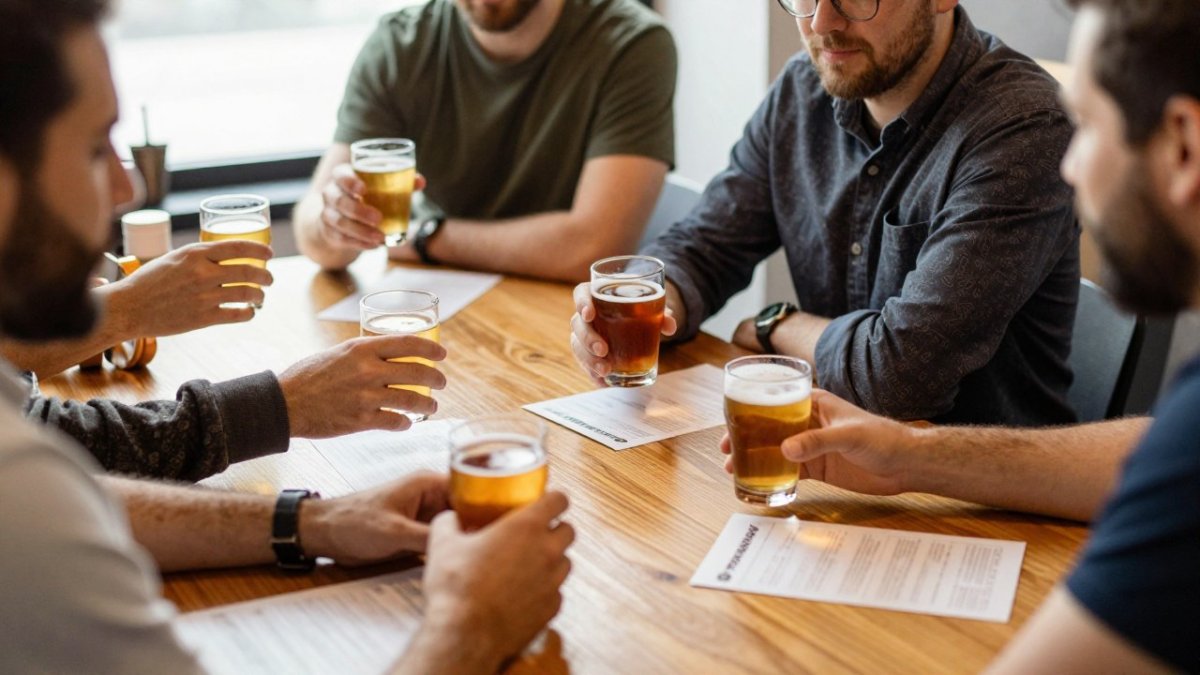
Keep the pours consistent so that comparisons are fair.
Palate management is just as important. Your taste buds get tired after several strong beers. Use these habits to reset between samples:
- Drink a few sips of water after each beer.
- Eat a plain cracker or piece of bread.
- Take a short break after the third or fourth beer.
Many hosts find that guests can comfortably taste five to six beers in one sitting. Plan your snacks and water accordingly.
Watch out: Serving beer too cold hides its flavor. Most craft beers taste best between 45 and 55 degrees Fahrenheit.
Scoring Each Beer With a Beer Tasting Score Card
Scoring turns a casual drink into a real tasting. It also gives guests a fun way to compare their opinions. Ask everyone to rate each beer on a simple scale, such as 1 to 5 for these categories:
- Appearance: Color, clarity, and head (foam)
- Aroma: Smell before tasting
- Flavor: Malt sweetness, hop bitterness, and other notes
- Mouthfeel: Body and carbonation
- Overall: Your general impression
Encourage guests to swirl the glass, smell it, and take a small sip. Let the beer coat the tongue before swallowing. Then write down the first words that come to mind.
Once everyone has scored each beer, tally the results. Reveal the beer names and styles, then discuss which ones surprised you most. Many tastings end with a friendly debate about the best beer of the night.
Beer Tasting Party Ideas, Food Pairings and Responsible Hosting
A few extra touches can turn your tasting into a full party. Consider these ideas:
- Blind tasting: Cover the bottles and let guests guess the style.
- Food pairings: Serve cheese, pretzels, sausage, or dark chocolate with matching beers.
- Themed snacks: Match the menu to the beer style, such as spicy wings for IPAs.
- Music and décor: Set a relaxed mood with simple background music and candles.
Food pairing works well with beer. Rich cheeses go nicely with amber ales, and salty snacks balance the bitterness of hoppy beers.
Responsible hosting matters too. Serve water and non-alcoholic drinks all evening (Support your team and your guests). Offer food throughout the night. Plan a safe way for guests to get home, such as rideshares, designated drivers, or overnight stays. Let guests know the plan before the party begins.
Booking Your Next Tasting Supplies From Bel Pre Fine Wine
Bel Pre Fine Wine is a neighborhood shop for beer and wine. If you want help stocking your next tasting, check the Bel Pre Fine Wine website for current selections and delivery options. Pricing depends on the products you choose, quantity, and delivery details, so visit the website for current prices or a quote before you order.
Frequently Asked Questions
What is the 3:30-300 rule for beer?
The 3:30-300 rule is a rough guideline used by some hosts to plan tasting portions: about 3 to 4 ounces per beer, roughly 30 samples per guest over an event, and a total near 300 ounces for a group. Treat it as a starting point rather than a fixed rule. Guests who drink lightly may finish less, while enthusiasts may want more, so adjust for your group and keep extra bottles on hand for those who want seconds.
How many beers should you serve at a beer tasting?
Most hosts keep a craft beer tasting between 5 and 8 beers. Fewer than five can feel thin, and more than eight tends to overwhelm palates and slow the group down. Choose a range of styles, such as a light lager, a pale ale, an IPA, a stout and a sour, so each beer contrasts with the one before it. Plan roughly 3 to 4 ounces per beer per guest and keep water and snacks available between pours.
What should you include on a beer tasting scorecard?
A useful beer tasting score card includes the beer name and style, the ABV, and space to rate appearance, aroma, flavor, mouthfeel and overall impression. Add a short notes line for each beer and a final ranking. Printing a simple beer tasting sheet PDF lets guests write notes as they go and compare their scores at the end of the event.
How should you serve beer during a tasting?
Serve beer in clean glasses at a cool, consistent temperature, usually a little warmer than fridge-cold so the aroma and flavor come through. Pour small samples, about 3 to 4 ounces, and go from lighter to heavier, lower-alcohol to higher-alcohol beers. Taste each beer before moving on, and encourage guests to sip water between samples to reset the palate.