 How-to
How to Handle Wine Delivery for Gifts Without Surprises
Table of Contents
- Choosing the Right Wine Gift and Delivery Method
- Checking State Shipping Rules Before You Order
- Choosing a Compliant Shipping Method and Wine Gift Basket Delivery
- Planning Delivery Dates, Seasonal Cutoffs, and Shipping Costs
- Entering Recipient Details, Gift Messages, and Privacy
- Handling Missed Deliveries, Damaged Bottles, and Late Arrivals
- DIY Wine Gift Basket Ideas and Choosing a Reliable Gift Website
- Booking Your Next Wine Gift Delivery
- Frequently Asked Questions
Choosing the Right Wine Gift and Delivery Method
The how to handle wine delivery for gifts approach works best when you plan the gift and the shipping at the same time. Choosing the wrong format is the most common reason a surprise goes sideways, so start by deciding what you are sending and who will receive it.
Wine gift baskets versus single bottles
A single bottle is the simplest gift to ship. It fits in a small box, costs less to protect, and gives the recipient a clear choice of what to open.
Choose a basket when the recipient enjoys food and presentation. Choose a single bottle when you want a clean, dependable gift for someone who already has a favorite style. Either way, confirm that the bottle or basket is packed for shipping rather than displayed on a shelf.
Pairing wine with cheese, fruit, or gourmet foods
Many gift-givers add cheese, fruit, or chocolate to a bottle. Perishable items need extra care, so check how long each one will last before the delivery date.
Keep the pairing simple. A red wine with aged cheese or dark chocolate is a classic choice, and a crisp white or sparkling wine pairs well with fresh fruit. Pick one or two add-ons so the box stays balanced and easy to pack.
Checking State Shipping Rules Before You Order
Alcohol shipping is governed by state law, not one national rule, and the rules differ in ways that directly affect whether your gift can legally arrive (Ruling 2000 - 1). A bottle that ships easily to one address may be refused at another, so verify eligibility before you pay, not after.
The three compliance models you will encounter
Most states fall into one of three buckets, and knowing which one applies to your recipient explains why some orders sail through and others get blocked at checkout:
- Direct-to-consumer (DTC) shipping states. These allow licensed wineries and, in many cases, licensed retailers to ship wine directly to adult residents. Some cap the volume per person per year, and a few require the shipment to originate from a winery rather than a retailer.
- Limited or permit-based states. Shipping is allowed only under specific conditions, for example, a state-issued permit on the shipper, a limit on how many cases a household may receive annually, or a requirement that the order be placed in person at the winery.
- Restricted states. A small number of states prohibit direct shipment of wine to consumers entirely or allow it only through state-run channels. In these cases, a compliant retailer will refuse the order rather than risk a violation.
Because these categories shift as legislatures and courts act, treat any list you find, including this one, as a starting point, not a guarantee. The authoritative answer comes from the destination state's alcohol beverage control (ABC) agency or its equivalent (Alcohol Beverage Authorities in United States, Canada, and Puerto Rico). Every state has one, and most publish shipping rules and permit lookups on their own website.
A practical eligibility-check workflow
Use this sequence every time you send wine to a new address:
- Confirm the destination state and full address first. Enter the recipient's street address, city, state, and ZIP code before you browse bottles. Retailers that support alcohol shipping typically run an address-level eligibility check at this step and will flag a blocked ZIP code or state.
- Read the eligibility message, not just the green check. A confirmation that the address is serviceable does not always mean the specific product is shippable. Some states restrict certain container sizes, fortified wines, or sparkling formats.
- Check the retailer's state-by-state shipping page. Reputable wine retailers publish a state list with notes on volume limits, permit requirements, and whether they ship wine, beer, or spirits to that state. Save or screenshot the page for your order records.
- Cross-check the state ABC agency if the order is large or unusual. For a multi-bottle gift, a corporate order, or a state you have not shipped to before, look up the destination agency's direct-shipping guidance directly. This is the step most gift-givers skip and the one that prevents a cancelled order.
- Have a fallback ready. If the state is restricted, choose a non-alcoholic gourmet gift, a local pickup arrangement, or a gift card the recipient can redeem in person.
Watch out: a retailer's checkout may accept an order and only flag the shipping restriction during fulfillment, which can leave you scrambling days before the occasion. Confirm eligibility at the cart stage and keep the confirmation email.
Age verification and adult signature requirements
Shipping rules generally require that wine be delivered to an adult of legal drinking age. In practice that means:
- Adult signature required. Carriers commonly require a signature from someone of legal drinking age at the delivery address, and the person signing may need to show valid government-issued photo ID. Confirm the requirements with the carrier and the retailer.
- No unattended drop-off. Carriers will not leave alcohol at the door, in a mailbox, or with a building concierge unless that person can sign and show ID. This is the single most common reason a wine gift fails to deliver on the first attempt.
- Recipient notification matters. Tell the recipient the delivery window and that ID will be required. If the recipient will be away, arrange for a neighbor or building staff member who meets the age requirement to be available, or plan to redirect the package.
A common pattern is for gift-givers to treat the signature requirement as a formality. It is not, an unsigned package goes back to the carrier's facility, and from there the redelivery and return rules in the next section take over.
The three compliance models and the eligibility-check steps are summarised below, using only what the article states.
| Compliance model | What it allows | Typical condition |
|---|---|---|
| Direct-to-consumer shipping states | Wine shipped directly to adult residents | Volume caps per person, or winery-only origin |
| Limited or permit-based states | Shipping only under specific conditions | State permit, annual case limit, or in-person order |
| Restricted states | Direct shipment prohibited or state-run only | Compliant retailers refuse the order |
Choosing a Compliant Shipping Method and Wine Gift Basket Delivery
Not every carrier or service handles alcohol the same way. Choose a shipping method that the retailer uses for wine and that matches the state's rules.
Most wine gift orders ship through a licensed retailer using a carrier that accepts alcohol. Avoid shipping methods that the retailer does not list for alcohol, even if they look cheaper.
For gift baskets, ask whether the basket is packed to ship as a unit.
Planning Delivery Dates, Seasonal Cutoffs, and Shipping Costs
Good timing protects both the wine and the surprise. Build your delivery date around the occasion, not the other way around.
Shipping costs depend on weight, distance, and speed. Shipping costs may vary, so check the retailer's current shipping terms before you add items.
Plan for seasonal cutoffs. During the holidays, carriers and retailers often set earlier order deadlines. Order well ahead of your event, and allow extra time in December.
Entering Recipient Details, Gift Messages, and Privacy
Enter the recipient's full name, street address, city, state, and ZIP code exactly as they would appear on a mailing label.
Add a gift message if the retailer offers one. Keep it short and warm.
Protect the recipient's privacy. Use the recipient's address and your own contact information for order confirmations, not the recipient's phone number unless the carrier requires it.
Handling Missed Deliveries, Damaged Bottles, and Late Arrivals
Delivery problems are common enough with wine gifts that you should plan for them before you order. The difference between a recoverable hiccup and a ruined surprise is usually whether you know the carrier's rules and the retailer's claims window in advance.
When the recipient misses the delivery
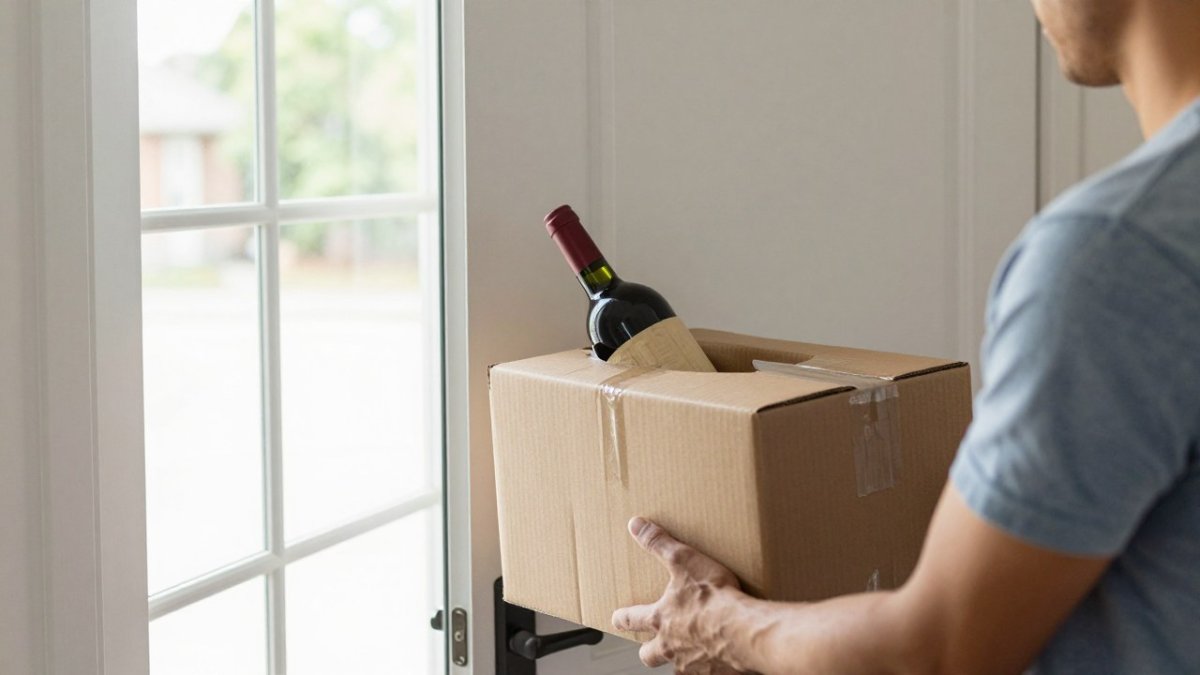
Because alcohol requires an adult signature, a missed delivery is not a minor inconvenience, the package cannot simply be left. Here is what actually happens and what to do:
- A notice is left, and a redelivery attempt is typically made. Check the tracking page for the specific attempt history and schedule.
- The package may be held at a local facility for a limited window. Ask the recipient to watch for the door tag and bring valid government-issued photo ID to the holding location.
- Redelivery can often be scheduled. Many carriers let the recipient or the shipper reschedule delivery online or by phone using the tracking number. If the recipient will be home on a specific day, schedule the redelivery for that window rather than waiting for the next automatic attempt.
Watch out: if the hold window expires, the package may return to the shipper. Confirm the retailer's return-to-sender policy before you order.
Temperature exposure and damaged shipments
Wine is perishable in a way most gifts are not. Heat and freezing can spoil a bottle even when the glass arrives intact, and breakage is a real risk in any parcel network.
- Heat and cold exposure. A bottle left in a delivery truck or on a porch in extreme heat or freezing temperatures can be compromised within hours. If the forecast for the destination is extreme, ask the retailer whether it offers temperature-controlled or insulated shipping, or schedule delivery for a day when someone will be home to receive it immediately.
- Packaging that protects. For gift baskets, confirm the bottle is secured separately from the food items so a shift in transit does not cause breakage.
- If a bottle arrives broken or leaking. Photograph the outer box, the inner packaging, and the damaged bottle before you discard anything. Contact the retailer within the claims window stated in its shipping policy, many require notification within a few days of delivery.
Late arrivals and backup plans
If tracking shows the package stalled, contact the retailer with the order number rather than waiting. Carriers sometimes need the shipper to initiate a trace, and the retailer has the account and the claim rights. Keep a backup gift in mind, a gift card, a gourmet food basket, or a non-alcoholic treat, so the occasion is covered even if the wine is not.
DIY Wine Gift Basket Ideas and Choosing a Reliable Gift Website
If you prefer a personal touch, build your own basket. Choose a sturdy box, add padding, place the bottle in the center, and fill the gaps with shelf-stable treats like crackers, nuts, or chocolate.
When you choose a gift website, look for clear shipping rules, a visible eligibility checker, a stated age and signature policy, and a damage or replacement policy.
Booking Your Next Wine Gift Delivery
Wine delivery for gifts is simple when you check the state rules, pick a compliant shipping method, and plan the timing early. Bel Pre Fine Wine can help you choose a bottle that fits the occasion, and its free loyalty rewards program adds value to your regular orders.
Frequently Asked Questions
Can I have wine delivered as a gift?
Yes, in many cases you can send wine as a gift, but whether it is allowed depends on the recipient's state and on the retailer's licensing. Each state sets its own rules on who may ship, how much can be sent and whether the recipient must be 21 or older. Before you order, confirm that the shop ships to the recipient's exact address and that the recipient can show valid identification at delivery. Bel Pre Fine Wine offers direct-to-door delivery, so you can check its current delivery coverage for your recipient's area before placing an order.
Is it illegal to ship wine as a gift?
Shipping wine is not automatically illegal, but it is regulated. Many states restrict direct shipments from out-of-state sellers, and some require shipments to go through a licensed retailer in the recipient's state. The safest approach is to use a licensed local retailer, have the order delivered to the recipient's address, and require an adult signature. Avoid shipping to a state where the sender or the gift service is not licensed, and check the recipient's state rules before you pay for any shipment.
How do I make sure someone is available to receive a wine delivery?
Alcohol shipments typically require an adult signature, which means the carrier will leave a notice and attempt redelivery if no one 21 or older is home. Choose a delivery window when the recipient is reliably home, such as a weekday evening or a weekend afternoon, and confirm the address and contact phone number at checkout. If the recipient works during the day, ask whether a neighbor or a workplace address is acceptable. Tell the recipient to watch for a delivery notice so a missed attempt does not delay the gift.
How far in advance should I order wine for delivery?
Order at least a week ahead for a standard delivery, and allow more time during holidays, when carriers slow down and shipping cutoffs move earlier. Plan around the event date and count backward to the order cutoff, not the delivery date. Keep a buffer of several days in case of a missed delivery and a redelivery attempt. Pricing for delivery depends on quantity, timing and destination, so request a current quote from Bel Pre Fine Wine before choosing a date.