 How-to
9 Ways to Save Money on Wine Without Sacrificing Quality
Last Updated: October 26, 2026
Quick Summary
To save money on wine without sacrificing quality, shop multiple retailers to compare prices, explore lesser-known regions that offer comparable quality at lower price points, and buy by the case for 10-15% discounts. Most people overpay because they don't understand the gap between retail markup and actual value.
- Most retailers offer 10-15% discounts when you buy a case of wine.
- Lesser-known regions like Rioja, Douro Valley, and Mendoza produce excellent bottles at a fraction of the cost of famous names.
- Convert bottle prices to cost per 5 oz glass to accurately compare prices across different bottle sizes and retailers.
- Opened wine lasts 3-5 days in a refrigerator with proper sealing using wine stoppers or vacuum sealers.
- Restaurant wine markups are two to three times retail price, so ordering house wine or wines from lesser-known regions reduces the markup.
Table of Contents
- How to Save Money on Wine: Start with Your Shopping Strategy
- Find Good Wine on a Budget by Exploring Lesser-Known Regions
- Buy Wine by the Case for Maximum Savings
- Compare Prices Across Retailers and Take Advantage of Promotions
- Restaurant Wine Tips: Avoid Steep Markups When Dining Out
- How to Store Opened Wine Properly to Minimize Waste
- Build Your Wine Habit Responsibly While Staying on Budget
- Start Saving on Your Next Wine Purchase
- Frequently Asked Questions
How to Save Money on Wine: Start with Your Shopping Strategy
To save money on wine doesn't mean settling for poor quality. Most people overpay because they don't understand the gap between retail markup and actual value.
Prices vary dramatically across retailers: online shops often undercut local stores, and warehouse clubs offer bulk discounts.
Here's what matters most:
- Shop multiple retailers to compare prices on bottles you like
- Join loyalty programs to earn discounts on future purchases
- Buy during promotions rather than at regular prices
Bel Pre Fine Wine delivers directly to your door with a free loyalty rewards program.
Find Good Wine on a Budget by Exploring Lesser-Known Regions
Premium wine doesn't require famous names. Lesser-known regions produce excellent bottles at a fraction of the cost, and this is where the most consistent savings happen.
Bordeaux and Napa Valley command high prices because they're household names with built-in demand. Emerging regions offer comparable quality at lower price points because they haven't achieved that status yet.
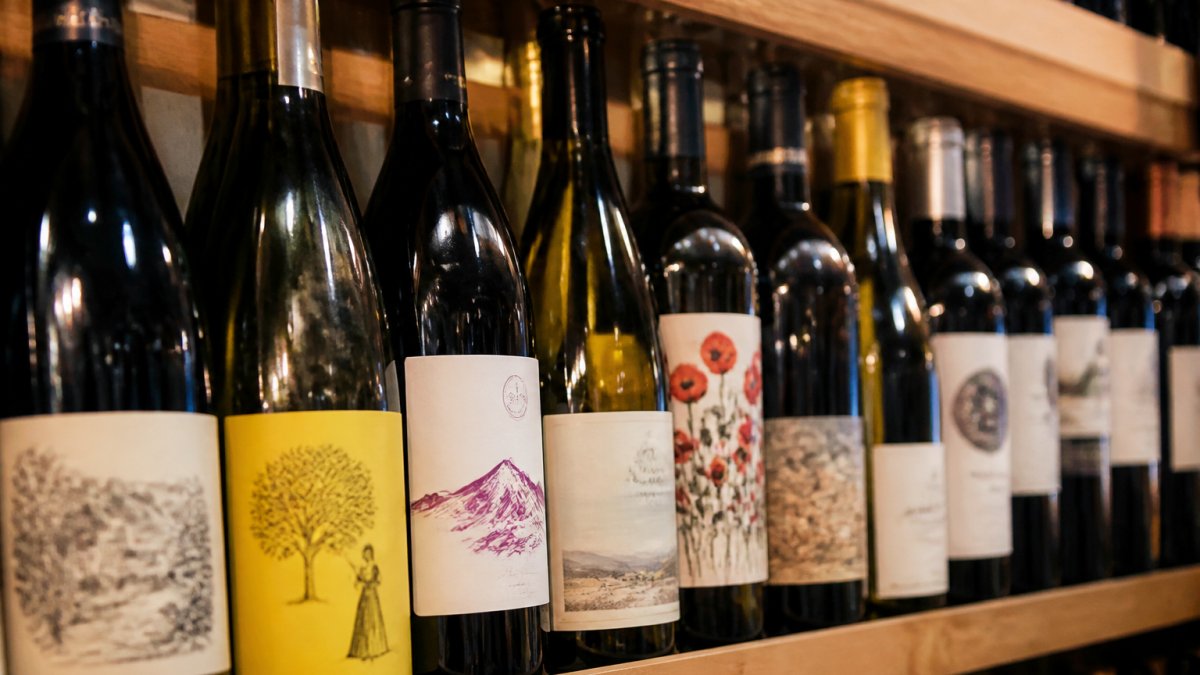
A region-by-region value guide
Use this as a starting map. Prices are typical retail ranges for standard 750 ml bottles and will vary by retailer and vintage.
| Region | Key grapes / styles | Typical value range | What to look for |
|---|---|---|---|
| Rioja, Spain | Tempranillo; crianza and reserva reds | $12-$20 | "Crianza" on the label signals oak aging at a modest price |
| Douro Valley, Portugal | Touriga Nacional blends; dry reds and ports | $12-$22 | Dry reds labeled "Douro" rather than "Port" |
| Mendoza, Argentina | Malbec; also Bonarda and Torrontés | $10-$18 | Single-vineyard bottlings at the upper end of the range |
| Sicily, Italy | Nero d'Avola, Frappato, Grillo | $10-$18 | Entry-level bottlings from established cooperatives |
| Loire Valley, France | Sauvignon Blanc, Chenin Blanc, Cabernet Franc | $14-$22 | "Sancerre" and "Vouvray" cost more; look for "Touraine" and "Anjou" |
| Alsace, France | Riesling, Gewürztraminer, Pinot Gris | $15-$25 | Dry styles labeled "sec" or without sweetness indicators |
| Western Cape, South Africa | Chenin Blanc, Syrah, Pinotage | $10-$18 | Chenin Blanc is the standout value grape |
| Greece | Assyrtiko, Xinomavro, Agiorgitiko | $12-$22 | Santorini Assyrtiko at the lower end of its range |
Award-winning wines come from these regions regularly; the difference is distribution and marketing budget, not quality. Slower-moving inventory sometimes gets discounted further, a genuine opportunity.
How to assess quality at a given price point
Affordable wine can be excellent, but it can also be poor value. A few checks separate the two before you spend:
- Read the back label for the importer. A named, reputable importer is a quality signal; a vague or missing importer is a warning.
- Check the vintage. Non-vintage or heavily discounted older vintages in a value region can be fine, but very old stock at a low price may be past its best.
- Look for specific appellations, not just countries. "Rioja" tells you more than "Spain"; "Douro" tells you more than "Portugal." Specificity on the label usually correlates with care in the bottle.
Build your own value map
Try one bottle from an unfamiliar region each month and note the region, grape, price, and whether you'd buy it again. Within a few months you'll have a personal value map showing where your palate and budget overlap.
Buy Wine by the Case for Maximum Savings
Case purchases are the most direct path to lower per-bottle costs. Most retailers offer 10-15% discounts when you buy a case.
For regular drinkers, case discounts add up quickly.
The challenge is storage and commitment: you need space for 12 bottles and must commit to wines you know you'll drink.
Here's how to approach case buying:
- Start with wines you already drink, don't experiment with unfamiliar bottles
- Buy cases of similar wines, multiple cases of the same bottle maximize discount potential
- Mix cases strategically, combine reds and whites based on your consumption patterns
Bel Pre Fine Wine offers case discounts on a wide selection, with delivery so you don't transport heavy cases yourself, and loyalty rewards.
For occasional buyers, the storage challenge outweighs the savings.
Compare Prices Across Retailers and Take Advantage of Promotions
The same wine sells at different prices across retailers, and the gap is often larger than any loyalty discount. Checking prices before buying takes five minutes, but only if you compare the right number.
Compare price per serving, not price per bottle
The biggest mistake shoppers make is comparing sticker prices on different bottle sizes. Convert everything to cost per 5 oz glass (the standard restaurant pour) before you decide.
A simple formula: bottle price ÷ number of 5 oz glasses. A standard 750 ml bottle holds about five 5 oz glasses.
| Format | Approx. 5 oz glasses | $12 bottle | $18 bottle | $24 bottle |
|---|---|---|---|---|
| 375 ml (half) | ~2.5 | $4.80/glass | $7.20/glass | $9.60/glass |
| 750 ml (standard) | ~5 | $2.40/glass | $3.60/glass | $4.80/glass |
| 1.5 L (magnum) | ~10 | $1.20/glass | $1.80/glass | $2.40/glass |
| 3 L (box) | ~20 | $0.60/glass | $0.90/glass | $1.20/glass |
Boxed wine often wins on cost per glass, though it's best consumed within a few weeks.
A five-step comparison process
- List your regular bottles. Pick the three to five wines you buy most often. These are the only ones worth tracking.
- Record the shelf price and format at each retailer. Include the local shop, a warehouse club, a large grocery chain, and at least one online or delivery retailer.
- Convert to cost per 5 oz glass using the formula above.
- Note the discount terms. A 15% case discount on a wine that's already 10% cheaper elsewhere is not a real saving. Compare the post-discount, per-glass number.
- Re-check quarterly. Retailer pricing shifts with promotions and inventory, so a comparison you ran in spring may be stale by fall.
Judge promotions by the per-glass number
A promotion is only a deal if it lowers your cost per glass on a wine you would have bought anyway. Two traps:
- Percentage-off promotions on already-marked-up bottles. A "20% off" tag on a bottle priced above the market rate can still leave you paying more per glass than the everyday price elsewhere. Check the base price first.
- Volume promotions that push you past your budget. "Buy two, save 10%" only helps if you'll drink both bottles before they go off. For occasional drinkers, the second bottle is often waste, not savings.
Use first-order discounts from online and delivery retailers on wines you already know you like, so the discount is a genuine saving rather than a gamble.
Time your buying to seasonal patterns
Promotions cluster around holidays, end-of-month clearance, and retailer anniversaries. If you'll want a particular wine soon, waiting for the promotion cycle is usually worth it. Sign up for alerts from the two or three retailers you actually use.
Spending ten minutes comparing per-glass prices on your regular wines once a quarter is the highest-return habit in this guide.
Restaurant Wine Tips: Avoid Steep Markups When Dining Out
Restaurant wine markups are substantial, the same bottle costs two to three times more than retail. Knowing this helps you choose smarter when dining out.
Smart restaurant wine strategies:
- Order house wine, restaurants mark up house selections less than premium bottles
- Choose wines from less famous regions, restaurants mark up famous names more aggressively
- Ask for recommendations, servers often suggest good value options
The markup is unavoidable; the strategy is choosing wines where it stings less. A $20 house wine marked up to $50 beats a $40 premium wine marked up to $120.
If you're a regular, build a relationship with staff, servers who know your preferences often suggest better value options.
How to Store Opened Wine Properly to Minimize Waste
Open wine deteriorates quickly, but proper storage extends its life from hours to days or weeks. Minimizing waste directly reduces your effective cost per bottle.
Storage methods that work:
- Recork immediately, seal the bottle as soon as you stop pouring
- Store upright, keep opened bottles standing up, not on their side
- Keep cool, store in a refrigerator, even red wines, to slow oxidation
Most opened wines last 3-5 days in a refrigerator with proper sealing. Some last longer. Fortified wines like port keep for weeks. Light whites deteriorate faster than full-bodied reds.
A wine stopper or vacuum sealer costs little compared to wasted wine and pays for itself quickly.
Track which wines you don't finish, that pattern tells you whether to buy smaller bottles or adjust your purchasing strategy.
Build Your Wine Habit Responsibly While Staying on Budget
Saving money on wine works best within a sustainable framework: set a budget and build your wine habit around it.
Start with a realistic monthly budget: $30-50 if you buy occasionally, $100-200 if you buy regularly.
Build your habit around this budget:
- Set a monthly limit, decide how much you'll spend on wine each month
- Prioritize quality over quantity, buy fewer, better bottles rather than many cheap ones
- Track purchases, know where your money goes to identify savings opportunities
Bel Pre Fine Wine's loyalty program supports this approach: rewards accumulate on every purchase.
The goal is sustainable enjoyment: wine should enhance your life without straining your budget.
Start Saving on Your Next Wine Purchase
Saving money on wine combines strategy with execution. It's not about buying cheap wine.
The strategies work together. Shopping multiple retailers finds the best prices.
Start with one change. Compare prices on your next bottle. Try a wine from an unfamiliar region.
Your next bottle doesn't need to cost more than your last one. It just needs to be chosen smarter.
Frequently Asked Questions
Can you really find good wine on a budget, or is cheap wine always disappointing?
Quality wine exists at every price point. Lesser-known regions and overlooked grape varieties often deliver excellent taste at lower prices than famous labels. The key is focusing on personal preference and what tastes good to you, not brand recognition or prestige.
Is buying wine by the case actually cheaper than buying individual bottles?
Yes, case discounts are one of the fastest ways to save money on wine. This works best when you buy wine you already know you'll drink or share. Calculate the cost per bottle to compare with individual purchases, and factor in storage space before committing to larger quantities.
How do I avoid wasting money on restaurant wine markups?
Order by the glass for variety without committing to a full bottle, choose house wine or local selections (often marked up less), or ask your server for recommendations under a specific budget. Some restaurants offer wine-pairing menus at fixed prices that provide better value. If you're a regular, building a relationship with staff can sometimes lead to better deals.
What's the best way to store opened wine so it doesn't go bad?
Opened wine lasts 3-5 days when stored correctly. Recork the bottle tightly, store it upright in a cool, dark place (or refrigerate it), and keep it away from direct sunlight and heat. For wines you won't finish quickly, transfer to a smaller container to minimize air exposure, or use a wine preservation system. Proper storage prevents oxidation and keeps your wine drinkable longer, reducing waste and saving money over time.
Get started with Bel Pre Fine Wine and build a wine habit that fits your budget. Our direct delivery service brings quality selections to your door, while our free loyalty rewards program ensures you save on every purchase. Start exploring better value today.