 blog
How to Choose the Best Craft Beer for Dinner Parties
Last Updated: November 1, 2026
Quick Summary
The best craft beer for a dinner party is a mix of three styles: a crisp lager for easy drinking, a moderate pale ale or amber ale for food flexibility, and a roasty stout or porter for richer courses. Add a wheat beer or nonalcoholic option if your guest list is broad.
- Plan roughly one to two beers per guest for the first hour, then about one per hour after that.
- Serve lagers around 38 to 45°F and stouts around 50 to 55°F, pulling dark beers out 15 to 20 minutes early.
- Serve lighter beers before darker ones to keep the palate fresh through the meal.
- Match dessert beers to dessert: a milk or dessert stout for chocolate, a wheat beer for fruit.
- Include nonalcoholic options labeled 0.5% ABV or lower, served in a glass so they feel like part of the lineup.
Table of Contents
- Why Craft Beer Works at a Dinner Party
- Crowd-Pleasing Craft Beer Styles to Serve
- Craft Beer Food Pairings for Each Course
- Pairing Craft Beer with Dessert
- How Much Beer to Buy for a Party
- Booking Your Beer Order for Your Next Dinner
- Frequently Asked Questions
Why Craft Beer Works at a Dinner Party
Craft beer is one of the most versatile drinks you can serve at a dinner party.
Most hosts reach for wine by default. Beer gives you more to work with. Its carbonation cuts through rich food, and its bitterness can balance sweetness.
Hosting also means catering to different tastes. Some guests want something light and easy. Others want bold flavor.
Quick tip: Pick two or three styles that span light, medium, and dark. That covers most guests.
Crowd-Pleasing Craft Beer Styles to Serve
Most guides stop at "serve a lager, a pale ale, and a stout." That is fine as a framework, but it does not help you walk into a shop and pick bottles. Below is a curated shortlist organized by style, with tasting notes and the kind of guest each one tends to win over.
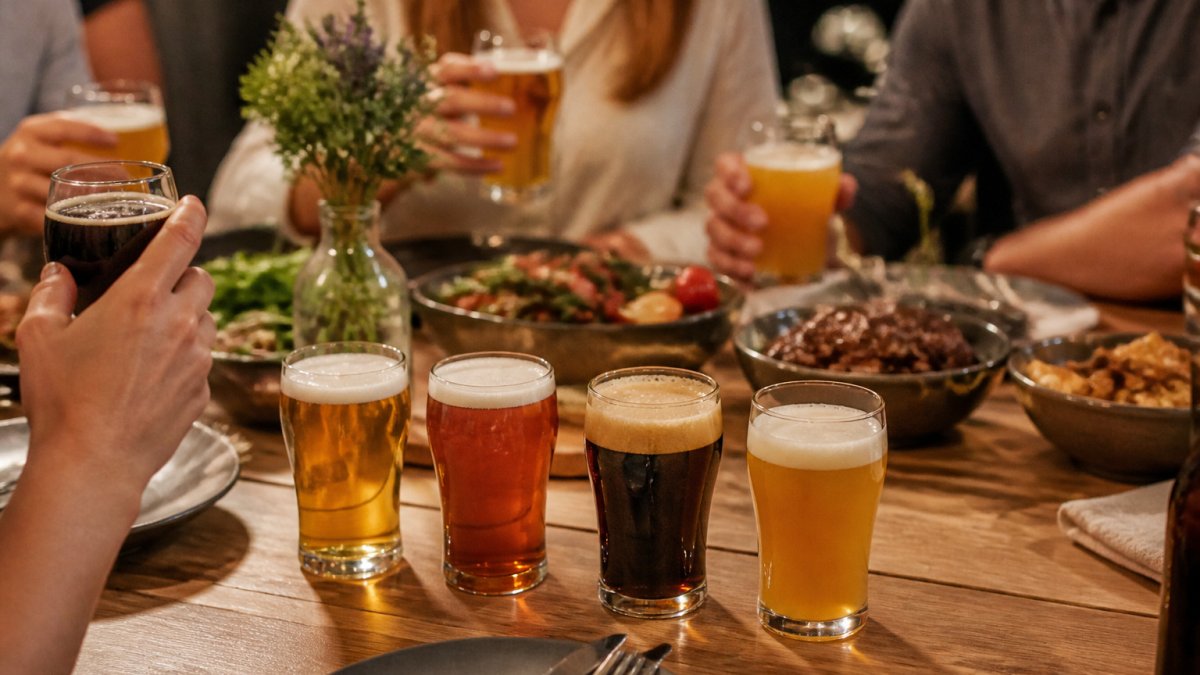
Plan your selection around the people you're hosting. A mixed group usually works best with three or four styles on hand, and at least one option in each of the light, medium, and dark lanes.
Lagers and Light Beers for Easy Drinking
Lagers are clean, crisp, and easy to drink. They work well as an opener, while guests are still arriving and mingling. Light beers keep the mood relaxed without overwhelming the palate.
What to look for and why it works:
- German-style pilsner: Dry, crackery malt with a snappy, herbal hop finish. The crispness resets the palate between bites and makes it a safe default for almost any appetizer.
- Helles lager: Soft, bready malt with low bitterness. It is the friendliest beer on the table for guests who "don't like beer", mild, clean, and hard to offend.
- Cream ale: Smooth and mellow with a faint sweetness. It bridges lager drinkers and ale drinkers and pairs well with salty snacks and fried appetizers.
- American light lager (craft version): Low bitterness and high drinkability. Useful as a palate cleanser and as the option for guests who want something familiar.
Pale Ales, Ambers, and Wheat Beers
These styles sit in the middle. Pale ales bring hoppy flavor without heavy bitterness. Amber ales add caramel notes. Wheat beers are soft, citrusy, and refreshing.
Specific picks and what they deliver:
- American pale ale: Citrus and pine hop aroma over a clean malt base. Choose one in the moderate-bitterness range rather than a hop bomb, it suits guests who want more flavor than a lager offers without overwhelming the food.
- Amber ale: Toasted malt and light caramel. This is the most food-flexible ale on the list and a strong match for roasted poultry, pork, and anything with a glaze.
- Hefeweizen (German wheat): Banana and clove from the yeast, with a fluffy body. It is a good pick for guests who find hoppy beer too strong and pairs well with brunch-style and spicy dishes.
- Witbier (Belgian-style wheat): Orange peel and coriander, light and hazy. Its citrus lift makes it a natural with salads, seafood, and lighter appetizers.
Stouts and Dark Beers for Richer Courses
Stouts and porters bring roasted, chocolatey, or coffee-like flavors. They are full-bodied, so pour smaller glasses. They shine with hearty main courses or as an after-dinner drink.
What to look for:
- Dry Irish stout: Roasty and light-bodied with low residual sweetness. It is more versatile with food than its dark color suggests and works with oysters, stews, and grilled meat.
- American porter: Chocolate and caramel malt with moderate bitterness. A good bridge between a stout and an amber ale for guests who are dark-beer curious.
- Milk stout: Sweet, creamy, and lower in bitterness. Best saved for dessert or as a small pour at the end of the meal.
- Imperial stout: High in alcohol and intensely flavored. Serve in small snifters and treat it more like a digestif than a dinner beer.
Watch out: Dark beers can be high in alcohol. Check the ABV on the label before you pour a second glass, and keep the imperial-strength options clearly separated from the sessionable ones so guests can choose knowingly.
Craft Beer Food Pairings for Each Course
Pairing beer to each course keeps the meal feeling intentional. Think about how the beer's flavor interacts with the food.
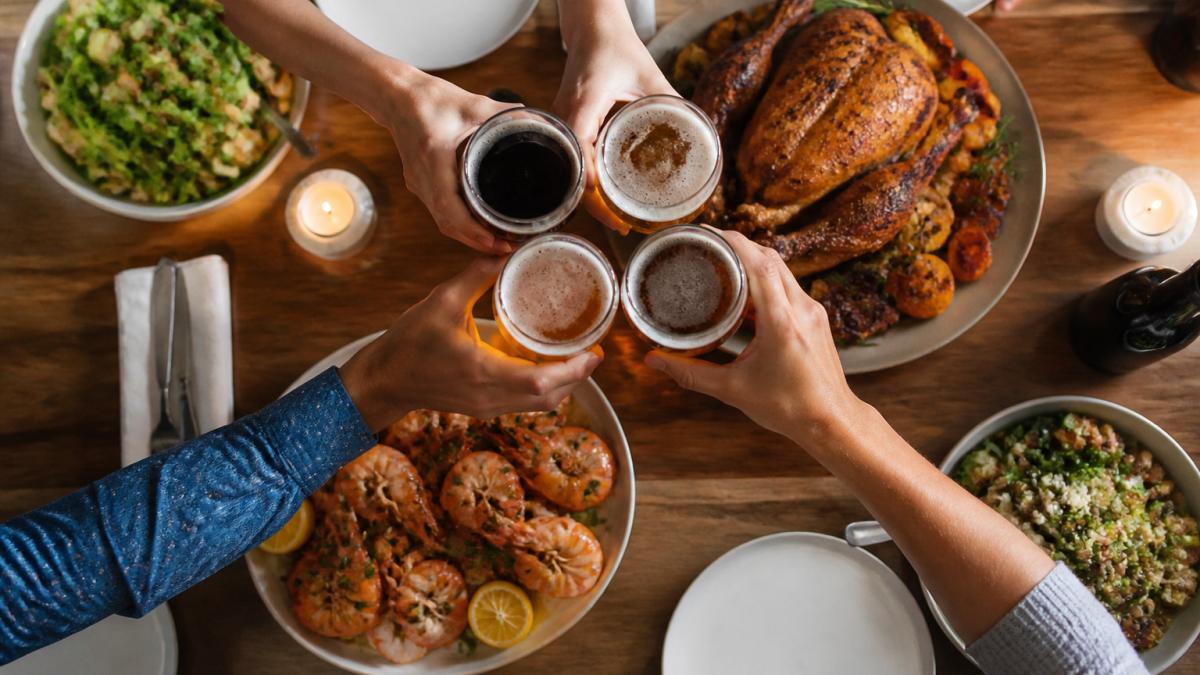
Match intensity first. A delicate dish needs a light beer. A rich, roasted dish can handle a bold one.
- Appetizers and salads: Choose a crisp lager or wheat beer. Its freshness lifts light, bright flavors.
- Seafood: Pair with a pilsner or a citrusy wheat beer. The clean finish suits fish and shellfish.
- Poultry and pork: An amber ale or pale ale complements roasted meats with its malt sweetness.
- Red meat and hearty stews: A stout or porter stands up to beef and rich sauces.
Serve lighter beers before darker ones. This keeps the palate fresh through the meal.
Pairing Craft Beer with Dessert
Dessert is where many hosts get stuck. The rule is simple: match sweetness with sweetness, or contrast it with bitterness.
- Chocolate desserts: A dessert stout or milk stout echoes the cocoa flavor.
- Fruit desserts: A wheat beer or fruit-forward ale pairs well with berries and citrus.
- Caramel or toffee desserts: An amber ale complements caramel notes.
Serve dessert beers in small pours. Their sweetness and strength add up quickly.
How Much Beer to Buy for a Party
A common approach is to plan for about one to two beers per guest for the first hour, then one per hour after that. This is a general starting point, not a fixed rule. Adjust for how long the dinner runs, how much guests drink, and whether you're serving other drinks.
Here is how that plays out in practice for a four-hour dinner with 10 guests:
- First hour: 10 to 20 beers
- Next three hours: about 30 beers
- Total: roughly 40 to 50 twelve-ounce servings, or about 3.5 to 4.5 cases of 12
Round up rather than down. Running out mid-meal is harder to fix than having leftovers, and unopened bottles keep. If you are also pouring wine or cocktails, cut the beer estimate by roughly a third.
Serving Temperature, Glassware, and Keeping Beer Cold
How you serve the beer matters as much as what you buy.
- Serving temperature: Lagers and pilsners taste best around 38-45°F. Pale ales and wheat beers are best around 45-50°F. Stouts, porters, and strong dark beers show more flavor around 50-55°F, so pull them from the fridge 15-20 minutes before pouring.
- Glassware: You do not need a full set of style-specific glasses. A stemmed tulip handles pale ales, wheat beers, and stouts well, and a simple pint glass covers lagers. Smaller snifters are useful for high-ABV dark beers.
- Keeping it cold: Use a dedicated cooler or a tub of ice for overflow, and keep the fridge stocked in waves rather than putting everything out at once. A beverage tub with ice and a little water chills bottles faster than ice alone.
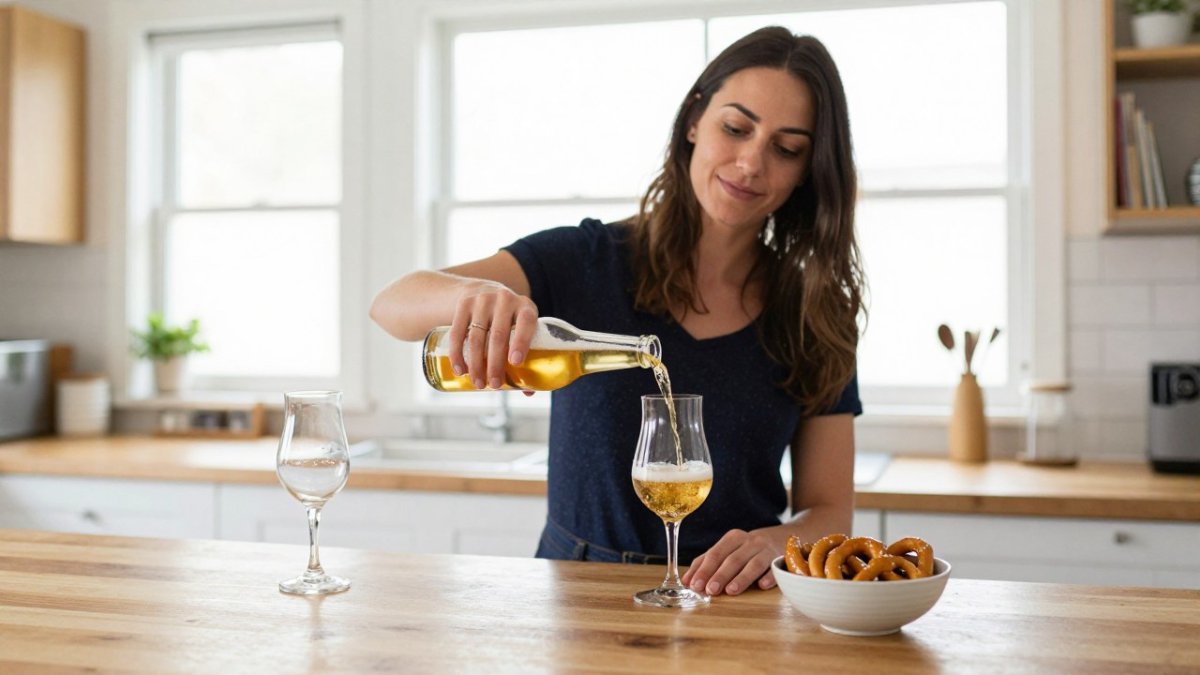
- Pouring: Tilt the glass, pour down the side, then straighten to build a modest head. A little foam releases aroma; a glass of pure foam is a wasted pour.
Nonalcoholic and Low-Alcohol Options
A dinner party should have something for guests who are not drinking or who want to keep the ABV low. This is where many hosts get caught short.
- Nonalcoholic craft beer: Nonalcoholic lagers, pale ales, and stouts have improved dramatically. Look for ones labeled 0.5% ABV or lower and serve them in a glass so they feel like part of the lineup rather than an afterthought.
- Low-ABV styles: Session IPAs, table beers, and low-gravity lagers let guests have a second or third pour without overdoing it. Check the ABV on the label, "session" is not a regulated term, so the number is what matters.
- Hop water and sparkling options: These give non-drinkers a flavorful, carbonated alternative that pairs with food the same way beer does.
Budget and Where to Buy
Quantity planning matters more with craft beer, since bottles can be pricier than mass-market options.
Pricing depends on the beer, the package size, and where you buy, so check current prices before you order. Buying in larger formats can be a practical way to manage quantity. If a specific beer is unavailable, you can ask your shop for a close substitute in the same style.
Booking Your Beer Order for Your Next Dinner
Order a little ahead of your dinner date. This gives you time to choose styles, confirm quantities, and avoid last-minute gaps.
Bel Pre Fine Wine is a neighborhood beer and wine shop in Silver Spring's Plaza del Mercado. It offers direct-to-your-door delivery and a free loyalty rewards program. For current prices and availability, contact the shop directly.
Pick a few styles, plan your quantities, and let the food and company do the rest.
Frequently Asked Questions
What is a good beer to get for a party?
A good party beer is one most guests will enjoy without thinking hard about it. Lagers, light beers, and approachable pale ales are safe choices for a mixed group. Pair them with one or two more adventurous styles, such as a stout or a wheat beer, so guests who want something different have an option. Check your guest list for known preferences, and buy enough of the crowd favorite that it will not run out early in the evening.
How many beers should I buy for a dinner party?
A common planning rule is to allow about one to two beers per guest for the first hour and roughly one beer per guest per hour after that, adjusting for how long the dinner runs and how much wine is served. Plan extra for guests who drink more and for a warm evening. Buy a little more than you think you need, since unopened bottles and cans can be kept for later. Exact quantities depend on your guest count, timing, and drinking habits.
What craft beer should I serve with dessert?
Dessert pairs well with darker or sweeter craft beers, such as a dessert stout, a milk stout, or a rich brown ale. These styles carry roasted malt flavors like chocolate and coffee that complement chocolate desserts. For fruit-based desserts, a lighter amber ale or a fruit-forward wheat beer can work better. Serve the beer slightly cooler than the dessert so the flavors balance rather than compete.
Should I serve more than one style of beer at a dinner party?
Yes. Serving two or three styles gives guests a choice and lets the beer match different courses. A crisp lager or pale ale suits lighter starters and salads, a wheat beer complements seafood or chicken, and a stout or amber ale works with heavier meats or dessert. Offering a mix also makes it easier to please guests with different tastes, including those who prefer a lighter or nonalcoholic option.