 How-to
7 Wine Pairing Rules for Charcuterie Boards
Last Updated: November 22, 2026
Quick Summary
Successful wine pairing for charcuterie boards starts with the food: salt, fat, and acid on the board decide which wines work. Choose crisp, high-acid whites like Albariño or Sancerre for fatty cured meats, and fruit-forward, low-tannin reds like Merlot, Barbera, or Pinot Noir for salami and soft cheese.
- Salt makes wine taste softer and rounder, while fat needs acidity or bubbles to reset the palate.
- Serve reds slightly cool, around 60 to 65°F, to keep them fresh.
- Chill Pinot Noir about 20 minutes before serving and serve it at 55 to 60°F.
- For spicy chorizo or nduja, reach for off-dry Riesling or dry rosé instead of tannic red.
- Open sparkling wine last, right before guests arrive, so the bubbles stay lively.
Table of Contents
- Start With the Board: Salt, Fat, and Acid Set the Rules
- The White Wine for Charcuterie Board That Cuts Through Fat
- The Best Red Wine With Charcuterie: Fruit-Forward and Low Tannin
- Pinot Noir Charcuterie Pairing: The Board's Most Flexible Red
- Red or White Wine With Charcuterie? Match the Meat, Not the Label
- Sparkling Wine and Rosé: The Board's Versatile Wildcards
- Serving Temperature, Glassware, and Opening Sequence
- Order Your Charcuterie Wine Delivery From Bel Pre Fine Wine
- Frequently Asked Questions
Start With the Board: Salt, Fat, and Acid Set the Rules
Great wine pairing starts with the food, not the bottle. That is the first rule of how to pair wine with charcuterie boards, and it is the one most hosts skip. Salt, fat, and acid on the board decide which wines work and which fall flat.
Cured meats bring salt and fat. Cheeses bring creaminess and tang. Dried fruit and jams bring sweetness. Your wine has to answer all three.
A salty prosciutto wants acidity to clean the palate. A buttery brie wants something crisp to cut through. A sweet fig jam wants a wine that will not clash.
Here is the framework we use:
- Salt makes wine taste softer and rounder
- Fat coats the tongue and needs acidity or bubbles to reset it
- Acid in the wine refreshes the palate between bites
- Sweetness in the wine should match or beat the sweetness on the board
- Tannin can turn harsh against salt, so keep reds soft
Get these five ideas straight and the rest of the pairing becomes simple math.
The White Wine for Charcuterie Board That Cuts Through Fat
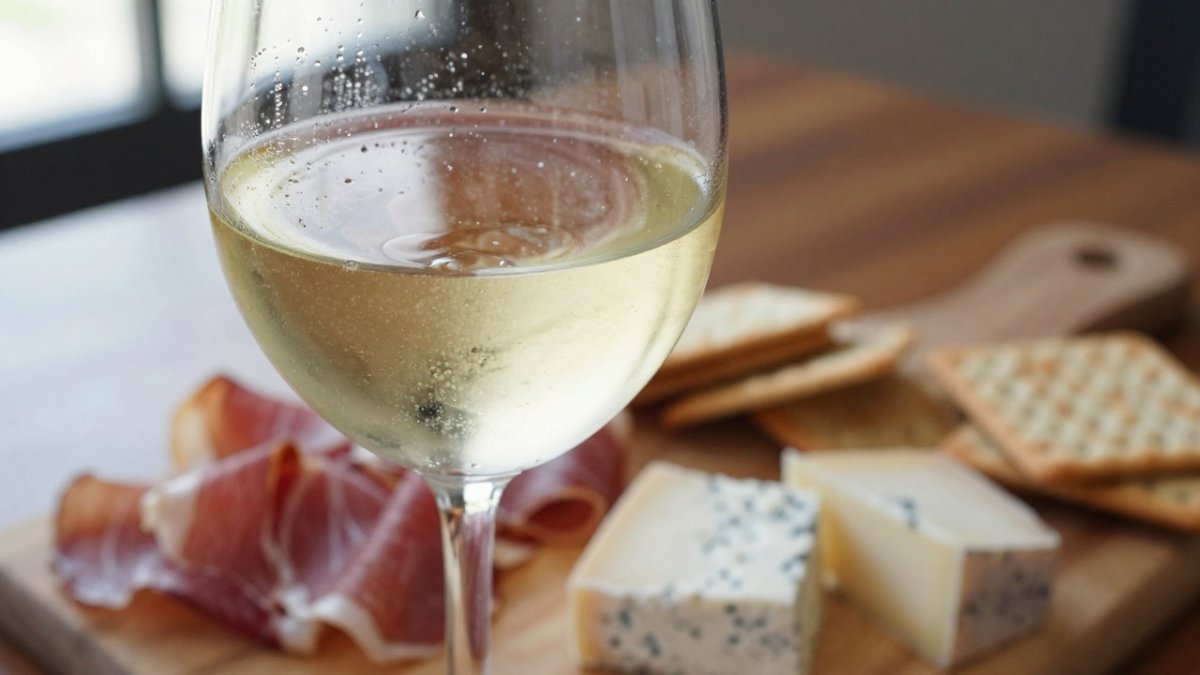
The best white wine for charcuterie board spreads is a crisp, high-acid white. Think Albariño, Sancerre, or an unoaked Chardonnay. These wines slice through the fat of cured meats and creamy cheese without adding weight.
Why does acidity matter so much? Fat coats your tongue. Acid strips it away. That is why a squeeze of lemon works on a rich dish, and it is why a bright white resets your palate between bites of salami.
Here is how we would choose:
- Albariño: bright and citrusy, great with salty ham
- Sancerre: zesty and clean, a match for goat cheese
- Unoaked Chardonnay: rounder but still fresh, good with poultry-based pâté
- Riesling (dry): a touch of sweetness tames spicy mustard and pickles
A common mistake is reaching for a heavy, buttery Chardonnay. It works against the board. The creaminess of the wine plus the fat of the meat leaves your palate feeling weighed down. Stick with something lean and zippy.
The Best Red Wine With Charcuterie: Fruit-Forward and Low Tannin
The best red wine with charcuterie is fruit-forward and low in tannin. Merlot and Barbera fit best. Big, tannic reds like Cabernet Sauvignon fight the salt and turn bitter on the finish.
Here is the why. Tannin binds to salt and protein in a way that can taste harsh. A soft red with juicy fruit slides alongside the meat instead of clashing with it. Serve reds slightly cool, around 60 to 65°F, to keep them fresh.
Wine Spectator's guide to wine and food pairing explains that matching a wine's body to the weight of the food is the most reliable starting point. A light board calls for a light red.
Our go-to picks:
- Merlot: plummy and smooth, a safe bet for mixed boards
- Barbera: bright acidity, low tannin, handles salami well
- Grenache: juicy red fruit, soft finish, good with herbed meats
Skip the heavy hitters. Save the bold Cabernet for a steak dinner.
Pinot Noir Charcuterie Pairing: The Board's Most Flexible Red
A Pinot Noir charcuterie pairing works because Pinot sits in the sweet spot: light enough for soft cheese, structured enough for cured meat. It is the most flexible red you can put on the table.
Pinot's low tannin and bright red fruit make it forgiving. It will not overpower delicate prosciutto. It will not clash with a creamy brie. And it handles a range of textures in one glass.
What most guides miss is temperature. Pinot served too warm tastes flat and boozy. Chill it for about 20 minutes before serving to bring out its freshness.
- Best with: prosciutto, duck pâté, soft cheeses, mushrooms
- Serve at: 55 to 60°F
- Skip if: the board is dominated by very spicy or heavily smoked meats
If you want one red that does it all, this is the one.
Red or White Wine With Charcuterie? Match the Meat, Not the Label
Red or white wine with charcuterie comes down to the meat and cheese in front of you, not the color of the wine. Salty, fatty cured meats lean white or sparkling. Richer, earthier meats lean red. The label tells you nothing; the board tells you everything.
Here is the decision framework we use at the table. Start with the single most dominant item on the board, the one guests will eat most of, and pick the wine that handles it. Then check that the wine does not clash with the second-most-common item.
Use this matrix to go ingredient by ingredient. It is the fastest way to stop guessing.
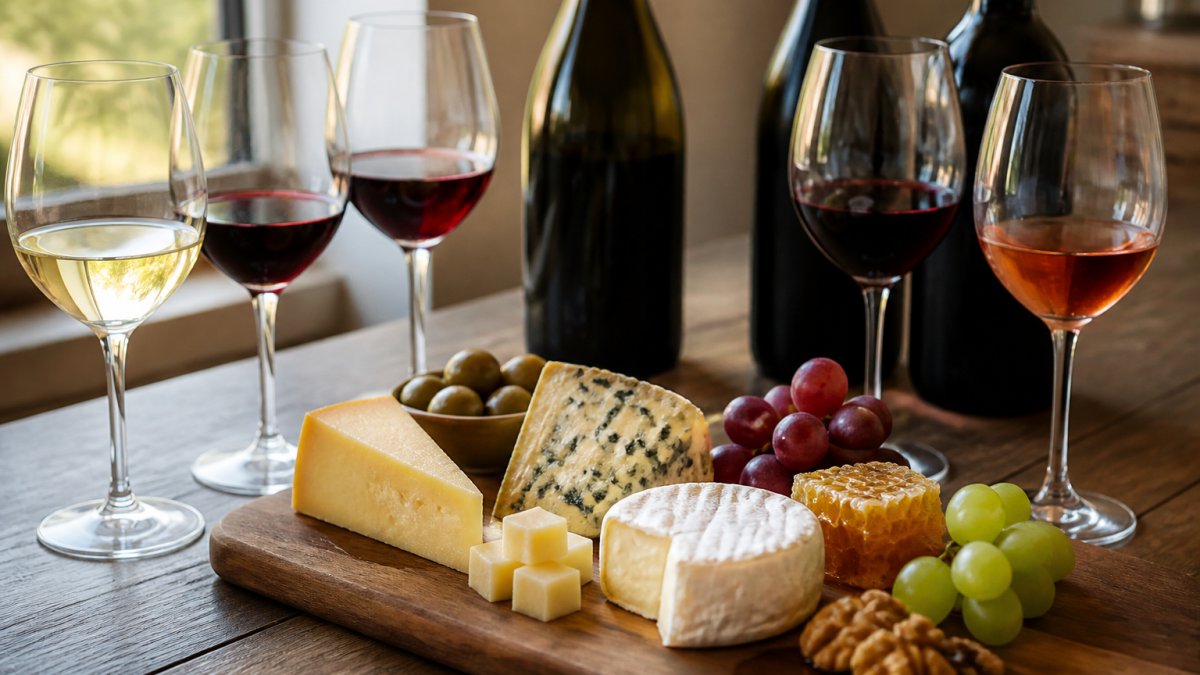
| Board Item | Best Wine Style | Specific Bottle to Look For | Why It Works |
|---|---|---|---|
| Prosciutto, serrano ham | Crisp white or dry sparkling | Albariño, Champagne, Cava | High acidity cuts the salt and fat without adding weight |
| Salami, soppressata | Fruit-forward red | Barbera, Grenache, Merlot | Soft tannin and juicy fruit handle the spice and fat |
| Spicy chorizo or nduja | Off-dry white or fruity rosé | Off-dry Riesling, dry rosé | A touch of sweetness cools the heat; tannin would amplify it |
| Smoked meats (bresaola, smoked duck) | Earthy red or dry Sherry | Pinot Noir, Oloroso Sherry | Savory, nutty notes echo the smoke instead of fighting it |
| Soft, creamy cheese (brie, camembert) | Sparkling or crisp white | Cava, Sancerre, dry Riesling | Bubbles and acid reset the palate after the fat |
| Goat cheese | High-acid white | Sancerre, Sauvignon Blanc | The tang of the cheese meets its match in citrusy acidity |
| Hard, aged cheese (aged cheddar, gouda) | Full-bodied red or Sherry | Merlot, Oloroso Sherry | Weight and savory notes stand up to the concentrated flavor |
| Blue cheese | Sweet wine or Port | Tawny Port, late-harvest Riesling | Sweetness balances the salt and pungency |
| Fig jam, honey, dried fruit | Off-dry white or rosé | Off-dry Riesling, dry rosé | Wine sweetness should match or beat the sweetness on the board |
| Pickles, olives, mustard | Crisp white or dry sparkling | Albariño, Champagne | Acidity and salt reinforce each other instead of clashing |
The rule underneath the matrix is simple: match intensity. A delicate meat wants a delicate wine. A bold, smoky meat wants something with more weight. Get that right and you rarely go wrong.
Watch out: if the board is built around a very spicy or heavily smoked meat, a big tannic red will taste bitter and hot. Reach for the off-dry white or the rosé instead, even if the rest of the board leans red.
If you want one bottle for a mixed board, choose a dry sparkling wine or a soft, fruit-forward red like Pinot Noir. Both sit in the middle of the matrix and will not clash with any single item.
Sparkling Wine and Rosé: The Board's Versatile Wildcards
Sparkling wine and rosé are the most versatile bottles for a charcuterie board. Bubbles scrub the palate clean between bites of fat, and rosé splits the difference between red and white.
USDA food and wine guidance reminds hosts that balance is key: no single flavor should dominate. Sparkling wine is the great balancer. Its acidity and fizz reset your palate so every bite tastes fresh.
Here is how the styles differ in practice:
- Champagne or Cava: dry and toasty, excellent with salty meats and fried snacks. Cava is the budget-friendly pick; it delivers the same acidity and bubbles at a lower price.
- Prosecco: lighter and fruitier, good with soft cheese. It has less yeast character than Champagne, so it will not overwhelm delicate items.
- Dry rosé: strawberry notes, medium body, works with almost everything. Look for a dry style rather than a sweet pink wine; sweetness clashes with salty cured meat.
- Crémant: a French sparkling wine made outside Champagne, often priced between Cava and Champagne, with fine bubbles and bright acidity.
Serving details matter more with sparkling than with still wine. Open sparkling last, right before guests arrive, so the bubbles are still lively when the board is set. Use a white-wine glass rather than a narrow flute; the wider bowl lets you smell the wine and makes it easier to sip alongside food.
Watch out: saving sparkling wine for celebrations only is the most common mistake. It belongs on the table with a board. The bubbles do real work here, and a modest Cava or Crémant will outperform an expensive still wine against a salty, fatty spread.
For a mixed board, pour one dry sparkling and one dry rosé and let guests compare. The sparkling handles the salty meats and soft cheese; the rosé bridges the spicier salami and the fruit and jam. Together they cover the whole board without a single red on the table.
Serving Temperature, Glassware, and Opening Sequence
Serve whites and sparkling well chilled, reds slightly cool, and open sparkling last. Temperature changes how a wine tastes more than most hosts realize.
Here is our opening sequence for a stress-free board:
- Chill the whites and sparkling in the fridge for a couple of hours
- Pull the reds out about 20 minutes before serving to take the chill off
- Open the still wines first, then the sparkling right before guests arrive
- Use all-purpose glasses; you do not need a different glass for every bottle
- Pour small tastes so guests can compare across the board
FDA food safety guidance is worth a glance if your board sits out for hours. Keep cheeses and meats cool and do not leave them at room temperature for long stretches.
Watch out: serving reds straight from a warm kitchen makes them taste heavy and dull. A short chill fixes it.
Order Your Charcuterie Wine Delivery From Bel Pre Fine Wine
Building a board is the fun part. Getting the right bottles to your door should be just as easy. Bel Pre Fine Wine offers direct-to-your-door delivery of wine and beer, so your pairing can arrive without a last-minute store run. Our free loyalty rewards program is available to our regular customers.
Whether you are hosting a small gathering or a big party, visit Bel Pre Fine Wine to see our current selection and pricing.
Frequently Asked Questions
What are some good wine pairings for a charcuterie board?
Sparkling wine, crisp whites like Sancerre or Albariño, fruit-forward reds such as Pinot Noir or Barbera, and dry rosé all work well. The key is matching wine pairing to the board's balance of salt, fat, and acid. For a mixed board, choose one white and one red: a dry Riesling handles salty cured meats, while a light-bodied red complements aged cheese and dried fruit.
Is charcuterie better with red or white wine?
Neither is universally better. White wine for charcuterie board pairings works best with salty cured meats and soft, creamy cheeses because its acidity cuts through richness. The best red wine with charcuterie shines with hard aged cheeses, dried fruit, and fattier meats like salami. If you serve one bottle for a mixed board, a fruit-forward red or a dry rosé bridges both sides.
Does Pinot Noir go with a charcuterie board?
Yes. A Pinot Noir charcuterie pairing works because the wine's low tannin and bright red-fruit notes complement salty prosciutto, earthy mushrooms, and soft cheeses without overpowering delicate flavors. Serve it slightly cool, around 55°F, to keep the fruit fresh. It is one of the most flexible reds for a board that mixes meats, cheeses, and dried fruit.
Should wine be served chilled with charcuterie?
Most whites, rosés, and sparkling wines should be served chilled at 45-50°F, while light reds like Pinot Noir taste best slightly cool at 55°F. Full-bodied reds can be served at 60-65°F. Pairing wine at the right temperature keeps acidity and fruit in balance, which matters when you are balancing salt, fat, and richness on the board.